
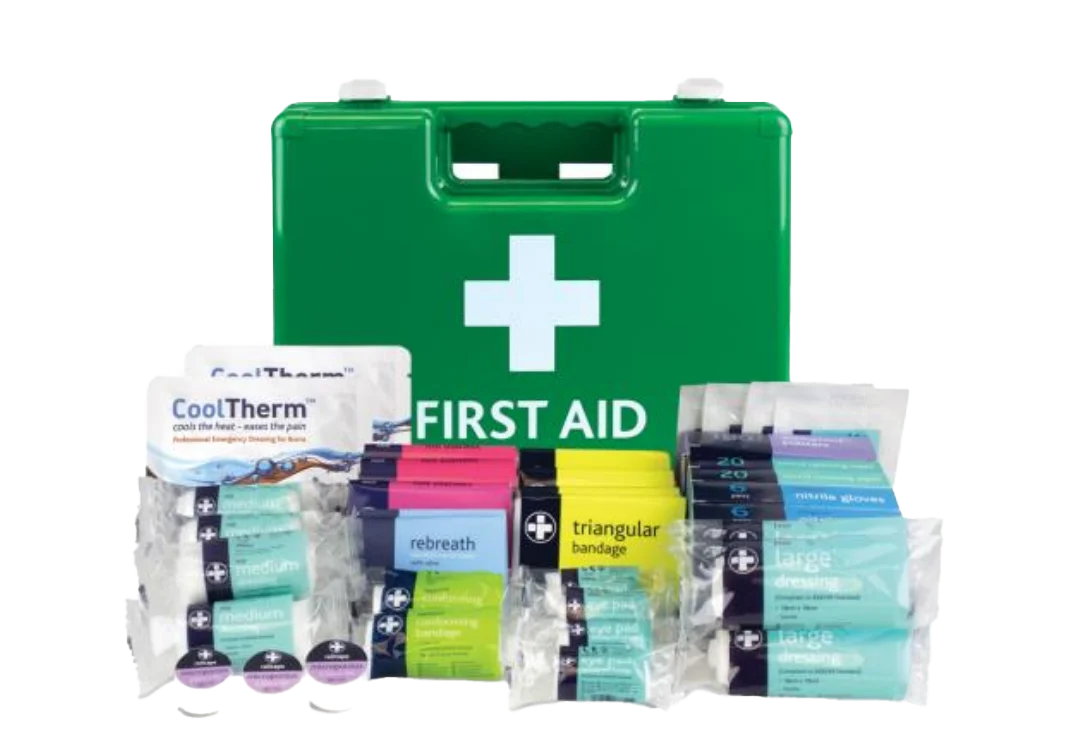
What the Updated BS8599 – 1:2026 First Aid Standard Means for Your Workplace
Workplace safety is always evolving, and the latest update to the British Standard for first aid […]
Workplace safety is always evolving, and the latest update to the British Standard for first aid kits is a clear step forward. The newly released BS8599 – 1:2019+A1:2026 amendment introduces important changes designed to strengthen first aid provision and ensure businesses are better prepared for real – world risks.
If you’re responsible for health and safety in your organisation, here’s what you need to know.
A More Comprehensive Approach to First Aid
The updated standard moves beyond basic compliance and encourages employers to take a more risk – based approach to first aid provision. While the core contents of standard first aid kits remain unchanged, the amendment highlights the importance of tailoring your equipment to the specific hazards in your workplace.
The Health and Safety Executive (HSE) continues to advise that all businesses carry out a full first aid needs assessment, considering whether their environment is low risk or high risk, and adjusting provision accordingly.
Key Changes in BS8599 – 1:2026
Burns Kits Now Formally Included
Where there is a risk of burns – such as in kitchens, workshops, or industrial settings – specialist burns kits are now a defined requirement. These kits must include appropriate contents to treat burn injuries quickly and effectively.
Eyewash Provision Clearly Defined
If your workplace presents any risk of eye injury (for example, from chemicals, dust, or debris), eyewash kits are now explicitly required in addition to standard first aid kits.
AEDs Expected in Most Workplaces
One of the most significant updates is the expectation that Automated External Defibrillators (AEDs) should be available in workplaces with around five or more people, including employees, visitors, and customers.
To be effective, AEDs must:
- Be accessible within two minutes
- Allow one minute to locate and retrieve
- Allow one minute to prepare and deliver treatment
Larger environments – such as warehouses, factories, or golf courses – may require multiple AEDs to meet this response time.
Greater Emphasis on Risk Assessment
The updated standard reinforces that one size does not fit all. The number, type, and placement of first aid kits should be based on:
- Workplace size
- Number of employees
- Level of risk
- Presence of lone workers or vehicles
What Size First Aid Kit Do You Need?
Alongside the updated BS8599 – 1:2026 standard, employers are expected to ensure they have the correct size and number of first aid kits based on their workplace risk level and number of employees.
While the British Standard provides general guidance, it’s important to remember this does not replace a full risk assessment – it should be used as a starting point.
Low – Risk Workplaces
(e.g. offices, shops, libraries)
- Fewer than 25 employees: 1 Small Kit
- 25–100 employees: 1 Medium Kit
- More than 100 employees: 1 Large Kit per 100 employees
High – Risk Workplaces
(e.g. warehouses, food production, light engineering, construction)
- Fewer than 5 employees: 1 Small Kit
- 5–25 employees: 1 Medium Kit
- More than 25 employees: 1 Large Kit per 25 employees
Additional First Aid Provision to Consider
The updated guidance also highlights the importance of supplementary first aid equipment, depending on the nature of your workplace.
Personal Issue First Aid Kits
These are ideal for employees in specific roles such as:
- Security personnel
- Maintenance staff
- Cleaners
Each individual can be issued their own kit where appropriate, ensuring immediate access to basic first aid.
Critical Injury Packs
For higher – risk environments involving:
- Machinery or sharp tools
- Construction or agriculture
- Power tools or cutting equipment
Employers should store appropriate quantities of critical injury packs, based on:
- The risks identified
- The maximum number of people on – site at any one time
What Hasn’t Changed?
Importantly, existing British Standard first aid kits remain compliant, provided they are:
- Fully stocked
- Within their expiry dates
- Appropriate for your workplace size
However, compliance alone is no longer the benchmark – adequacy based on risk is now the focus.
What This Means for Employers
To align with BS8599 – 1:2026, businesses should:
- Conduct (or review) a first aid needs assessment
- Ensure kits are complete, in date, and correctly sized
- Provide additional specialist kits where risks are identified
- Install AEDs where required, ensuring fast access
- Consider coverage for lone workers and vehicles
Creating a Safer Workplace
This update reflects a broader shift in workplace safety – moving from minimum standards to proactive, risk – aware protection.
By expanding first aid provision to include burns kits, eyewash solutions, and AEDs, employers can respond more effectively to emergencies and potentially save lives.
Need Help Upgrading Your First Aid Provision?
At Openhouse Products, we supply a full range of BS8599 – compliant first aid kits, along with burns kits, eyewash solutions, and AED equipment to help you meet the latest standards with confidence.
If you’re unsure what your workplace requires, our team can help you find the right solution based on your risk level and environment.